AgentGem documentation
AgentGem is a local web UI that reads what you've already built with your coding
agent — your agent setup (skills, MCP servers, CLAUDE.md) and your session
transcripts — redacts secrets at capture, and distills it into a secret-safe,
composable Gem. Analyze turns the procedures you repeat across
sessions into draft skills; the builder packages it all into a portable archive
(manifest + lock) you can install locally, merge with others, materialize for many
agent targets, and publish to the AgentGem marketplace.
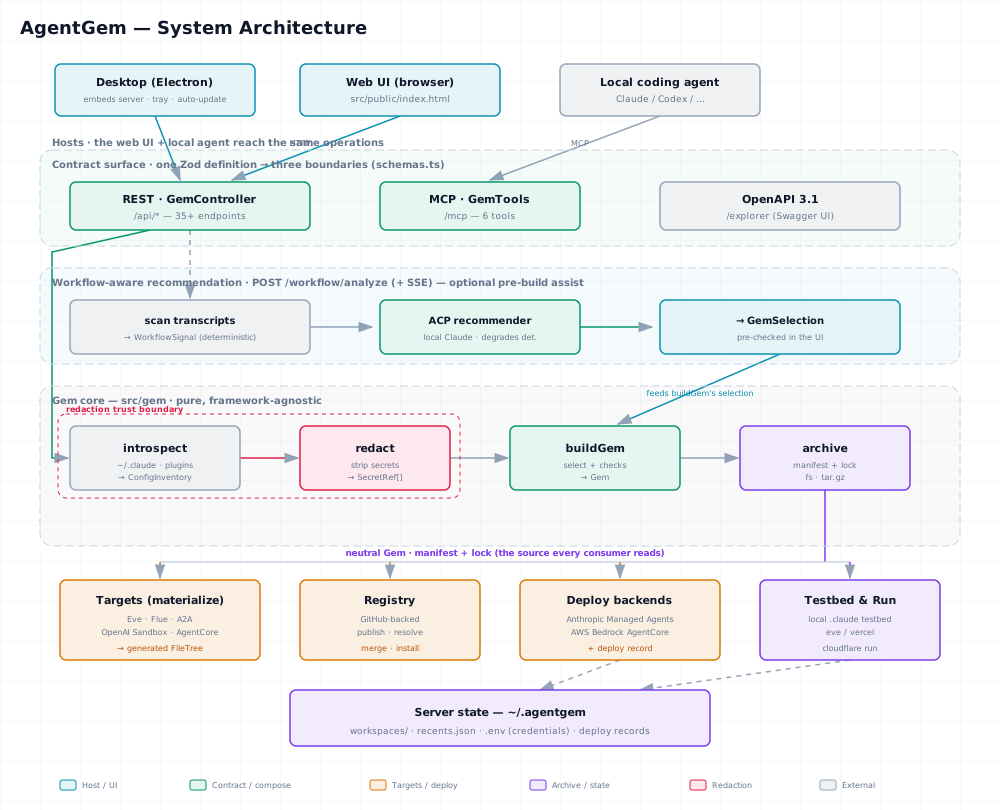
It's built on AgentBack, the ninemind AI-native API/MCP framework: every operation is defined once as a Zod contract and exposed as a REST endpoint, an MCP tool, and an OpenAPI 3.1 document — so the web page and your local agent call exactly the same thing.
Start here
- Getting started — install, run the local server, and build your first Gem.
- Desktop app — the native macOS/Windows/Linux build, in addition to
the
npxCLI. - Analyze — scan your agent's session history for workflow-aware Gem recommendations, and distill new draft skills from the procedures you repeat by hand.
- Concepts — what a Gem is, the archive format, the redaction trust boundary, and the AgentBack one-contract model.
- Editions — AgentGem OSS vs. Enterprise, and the community marketplace both share.
Working with your sessions
The console is more than a Gem builder — it reads, searches, and grades your session history, and turns it into things you can play and share.
- Recall — search across every past session by what happened inside
it, then chat with or extract across the ones that matter. Ranking is proven-use
aware (artifacts with good outcomes are boosted). Its intelligence is also the
agentgem-goldmineMCP server, so any coding agent can query your history. - Memory sync — the Memory panel bridges recall to external AI memory providers (mem0, supermemory): pull their memories in, and push scrubbed, consent-gated candidates out through a review outbox.
- Chat — drive a local coding agent (Claude, Codex) from inside the console, grounded in your transcripts, and distill the conversation into a Gem.
- Context hygiene — LLM-free detection of context bloat: a
per-session score, a "cut here at turn N" boundary, a session timeline, a
leaderboard, and live OS nudges from the
agentgem warmdaemon. - Play — AI-generated mini-games, built by chatting, sealed to run
anywhere, and versioned as first-class
gameGems.
Architecture & internals
- Architecture — the system map: clients → contract surface → Gem core → distribution, with diagrams.
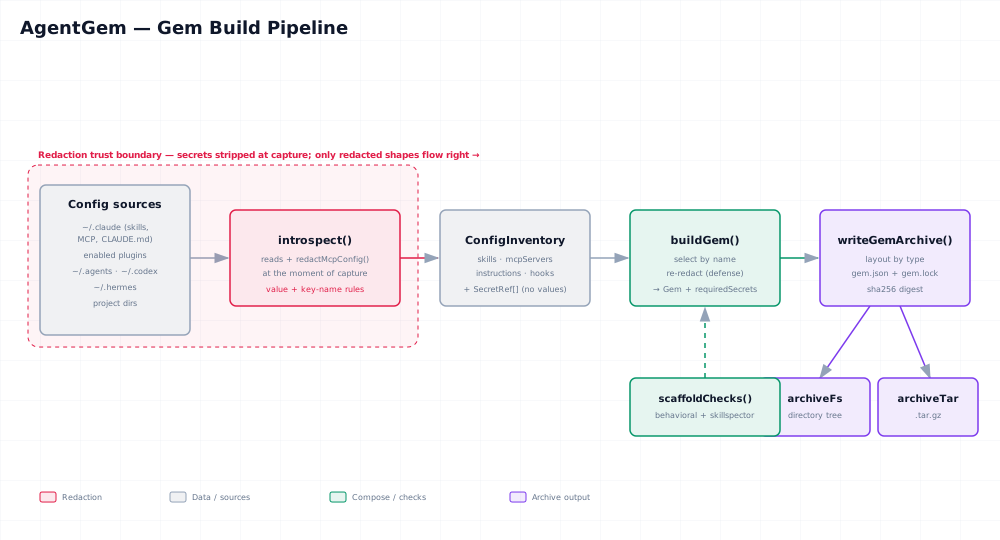
- The build pipeline — introspect → redact → buildGem → archive.
- Archive format — the manifest + lock spec, hashing, and serialization.
- Redaction — the trust boundary and its rules.
- Input containment — how outward-facing POST routes confine filesystem/network inputs (workspace-name, run-dir, and SSRF guards).
- API reference — every REST endpoint and MCP tool.
Distribution
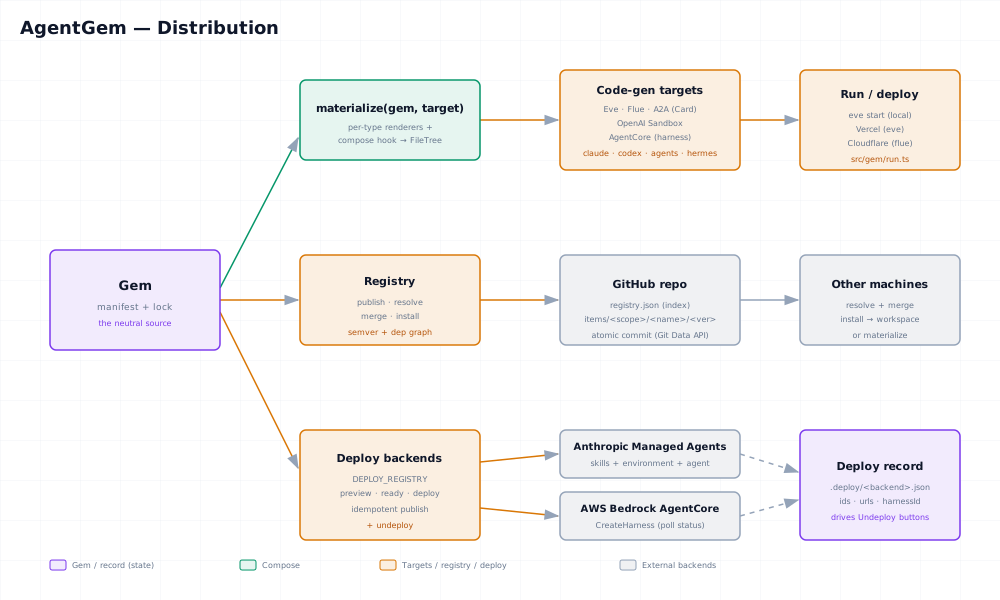
- Targets — the materialize targets (Eve, Flue, OpenAI Sandbox, Bedrock AgentCore, and the editor formats) and how a Gem renders to each.
- A2A — export a Gem as an A2A Agent Card or a runnable agent-to-agent server so other agents can discover and call it.
- The community marketplace at app.agentgem.ai — a free hosted service, shared by both editions, where published Gems live: publish composable Gems (Public / Unlisted / Private, versioned), browse, star, review, install, and play installable/offline mini-apps. Groups and review-gated releases are Enterprise. Early testbed — hosted data may be reset.
- Sharing & identity — install a published Gem with one command
(
agentgem get), pass one directly over an encrypted one-time hand-off (agentgem send/receive), and verify a Gem runs across agents (agentgem verify). Accounts on the community marketplace use better-auth (GitHub, Google, X, or a passkey) with a/@handleprofile hub; the CLIagentgem bindties this machine's signing key to a GitHub account for anti-sybil producer identity. - Testbed & run — install a Gem into a local testbed, and run a materialized target locally.
Contributing
- Development — build, test, the decorator/compiled-
distsetup, and code conventions.
Diagrams
Architecture diagrams live in diagrams/ as .svg (embedded in these docs),
.png (raster fallback), and .html (interactive, with Copy / PNG / PDF export):